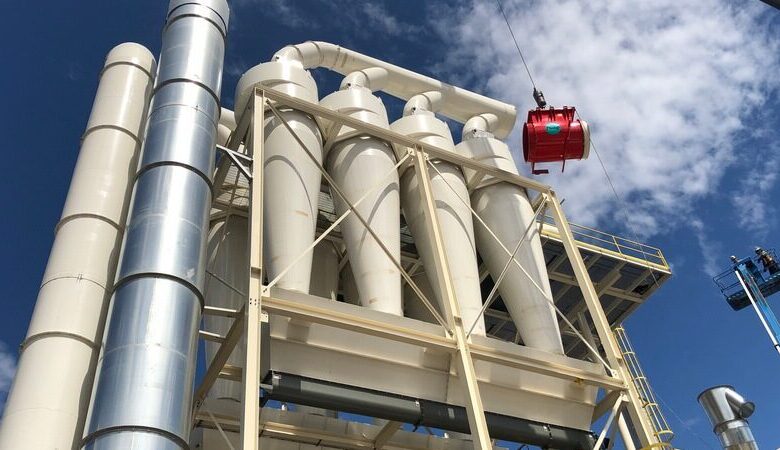
If you manage a large industrial facility, you already know that energy costs are one of the biggest line items on your operating budget. What you might not realize is how much your dust collection system is contributing to that number, for better or worse, depending on how it was designed.
A well-designed system runs efficiently, keeps energy consumption in check, and holds up over years of heavy use. A poorly designed one quietly bleeds energy around the clock, long after the installation crew has packed up and gone home. The gap between the two is often significant, and in large facilities, that gap adds up fast.
This post breaks down the key design factors that directly affect how much energy your dust collection setup consumes, and what to look for when evaluating whether your current system is working against your operational goals.
The Fan Motor Is Only Part of the Story
When most people think about energy use in a dust collector, they focus on the fan motor. That makes sense. Fan motors in large industrial systems can range from 10 horsepower to well over 100 horsepower, so they are obviously a major driver of electricity costs.
But the motor’s nameplate horsepower is not the whole picture. What actually matters is how hard the motor has to work to move air through the system under real operating conditions. That depends on system resistance, ductwork layout, filter loading, and whether the airflow capacity matches the actual demand at any given moment.
A motor running at full speed to compensate for a poorly designed duct network will consume far more energy over a year than a correctly sized motor running efficiently on a well-designed system. The motor is just the output. The design is what determines how hard it has to work.
Static Pressure and Why It Drives Up Energy Use
Static pressure is the resistance the fan has to overcome to move air through the system. Think of it like friction in a pipe. The more resistance there is, the harder the fan works, and the more electricity it draws.
Several common design mistakes cause static pressure to climb unnecessarily:
Duct runs that are too long or too narrow. Every foot of ductwork adds resistance. When duct diameters are undersized to save on material costs during installation, the fan has to compensate by working harder. That tradeoff usually costs far more in energy over the life of the system than the upfront savings on duct material.
Too many elbows and direction changes. Sharp bends in ductwork create turbulence, which increases resistance. Well-designed systems use gradual sweeps and minimize direction changes where possible. It is a detail that gets overlooked in rushed or budget-driven installations, but it shows up on every energy bill.
Imbalanced branch lines. In a large facility with multiple pickup points, unbalanced branch lines can cause some areas to receive too little airflow while others receive too much. The fan has to run at higher speeds to compensate, consuming more energy than a properly balanced system would.
Fixed-Speed Fans vs. Variable Frequency Drives
One of the most impactful design decisions in any large dust collection setup is whether the system uses a fixed-speed fan motor or one controlled by a Variable Frequency Drive, commonly called a VFD.
A fixed-speed motor runs at the same speed no matter what. Whether the facility is running at full production with every machine operating, or running a partial shift with half the production floor idle, a fixed-speed motor draws roughly the same amount of power either way.
A VFD changes the motor’s speed based on actual system demand. When fewer machines are running, the fan slows down. When demand increases, it ramps back up. This is not a minor efficiency tweak. Fan laws dictate that reducing a fan’s speed by just 20 percent can cut its energy consumption by nearly 50 percent. In large facilities where production levels vary throughout the day or week, that difference is substantial.
The upfront cost of a VFD is higher than a fixed-speed setup. But in most large facilities, the energy savings recover that investment within a reasonable timeframe, and then continue generating savings for the remaining life of the equipment.
Filter Design and Pressure Drop Over Time
Filters are another area where design choices have a direct and ongoing impact on energy costs.
Every filter creates resistance. That is how filtration works. But some filter configurations manage that resistance better than others, and some systems are designed with far more filter surface area than the minimum required. More surface area means slower air velocity through the filter media, which translates to lower pressure drop and less work for the fan.
When filter surface area is undersized, pressure drop climbs faster as the filters load with dust. The fan works progressively harder between cleaning cycles, drawing more energy as each day passes. Systems with generous filter area stay within a more consistent pressure range, which keeps energy consumption more predictable and manageable.
Pulse-jet cleaning systems also play a role here. When the cleaning cycle is properly timed and the pulses are strong enough to fully clear the filter media, the filters stay cleaner and pressure drop stays lower. Systems with weak or infrequent cleaning cycles allow dust cake to build up, which increases resistance and pushes up energy use.
System Sizing: Too Big Can Be Just as Costly as Too Small
There is a temptation in large facilities to oversize a dust collection system on the assumption that bigger is always better. More airflow, more coverage, more safety margin. The logic feels sound.
But an oversized system has its own energy problems. A collector that is significantly larger than what the application requires still draws power, runs its cleaning cycles, and moves air. If the airflow capacity far exceeds what is actually needed, that excess capacity is waste in the form of energy consumed without a corresponding benefit.
The goal is to size the system correctly for the actual application, not to round up dramatically in hopes of never revisiting the decision. Getting the sizing right requires a thorough understanding of the dust types being collected, the air volumes needed at each capture point, the ductwork layout, and the facility’s production patterns. It is the kind of upfront work that pays for itself many times over in operating costs.
Leaky Ductwork Wastes More Than You Think
Duct leakage is one of the most underestimated energy losses in industrial dust collection. Studies in industrial ventilation consistently show that poorly sealed duct systems lose a meaningful percentage of their airflow through gaps, loose connections, and worn seals.
When the system leaks, the fan has to move more air to deliver the required volume at the actual collection points. That means higher motor speeds, more energy consumption, and often reduced collection effectiveness at the hoods and capture points where it matters most. In older facilities, ductwork that has been patched, modified, or simply neglected over the years can be leaking at a rate that noticeably affects both performance and operating costs.
Regular inspection and resealing of ductwork is a straightforward maintenance practice that most facilities do not prioritize as often as they should.
Designing for Energy Efficiency From the Start
The most cost-effective time to address energy efficiency in a dust collection system is before the system is installed. Once ductwork is run, fans are mounted, and the system is commissioned, making significant changes is expensive and disruptive.
That is why the design phase deserves serious attention. Working with an experienced solutions provider who understands both the technical demands of your specific application and the energy implications of each design choice is far more valuable than simply buying equipment and figuring it out during installation.
Key questions worth asking during any design or upgrade conversation include:
- Is the ductwork sized for velocity, not just convenience?
- Is a VFD included, and is it specified correctly for the load profile?
- Does the filter configuration provide enough surface area to manage pressure drop over time?
- Is the system sized for actual demand, or padded with unnecessary excess capacity?
- Are the collection hoods and capture points positioned to maximize effectiveness at the lowest possible airflow?
These are not overly technical questions. They are practical ones. And the answers can mean tens of thousands of dollars in difference over a system’s operating life.
The Bottom Line
Energy efficiency in large industrial facilities rarely comes from a single dramatic change. More often, it comes from a series of well-considered decisions made at the design stage and maintained throughout the system’s life. Dust collection is one of the most energy-intensive systems in many plants, and it is also one of the areas where thoughtful design decisions have the clearest and most measurable payoff.
If your facility is running a system that was installed years ago without much consideration for energy efficiency, or if you are planning a new installation or expansion, it is worth taking a closer look at how the design is affecting what you pay every month to keep the air clean and the operation running.
The right design does not cost more to operate. It costs less, and it keeps costing less for as long as the system runs.