
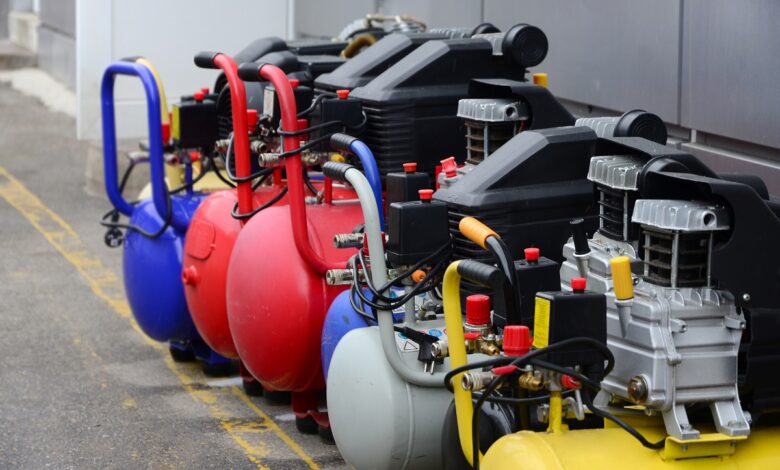
It’s simple to become sidetracked when looking for an air compressor by high motor horsepower or PSI (pounds per square inch) figures. However, CFM (Cubic Feet per Minute) is the most crucial metric to grasp if you want your tools to function without stuttering.
CFM measures the volume, whereas PSI measures the air’s “punch” or pressure. Consider it this way: CFM is the amount of air available to continue the task, whereas PSI is the force with which the air pushes.
Why CFM Dictates Your Performance
Choosing a compressor with the incorrect CFM is similar to attempting to power a fire hose with a garden straw; although the pressure may be present at first, the “juice” will run out almost immediately.
- Matching Your Tools: Matching Your Tools: Each pneumatic tool has a distinct need for air. A heavy-duty sander or paint sprayer may require 10 CFM or more, but a small staple gun might only require 2 CFM. Your tools will lose power or cease functioning completely while the motor tries to replenish the tank if your compressor is unable to keep up.
- Sustaining the Workflow: A high CFM permits “continuous duty.” You’ll have to wait for the compressor to “catch up” every few minutes if there isn’t enough volume, which reduces productivity and may even cause the compressor motor to overheat.
- Multitasking Capability: When two people are using air tools simultaneously in your shop, you have to add their CFM requirements together. With a little extra space, a compressor with a 10 CFM rating can run two 4 CFM tools at once.
Key Factors That Influence CFM
Not all CFM ratings are created equal. To get an accurate picture of performance, consider these variables:
- Operating Pressure:
CFM is usually measured at 90 PSI. If you increase the pressure, the delivered CFM typically drops. - Tank Size:
The tank does not create air but acts as a buffer. A larger tank helps manage bursts of high CFM usage. - Pump Stage:
Two-stage compressors generally provide higher CFM output than single-stage models, making them better suited for industrial applications.
How to Calculate Your Ideal CFM
Don’t guess and end up with a machine that underperforms. Follow this simple formula to find your “sweet spot”:
Find the “Max User”: Determine which of your kit’s tools has the highest CFM requirement.
Consider Simultaneous Use: Add the CFM requirements of all the tools you intend to run concurrently.
The 30% Rule states that you should always include a safety buffer of 25–30% in your total. This prolongs the machine’s life and permits future tool upgrades by preventing the compressor from continuously operating at 100% capacity.
For instance, find a compressor that can produce at least 7.5 to 8 CFM at 90 PSI if your most demanding tool needs 6 CFM.
Final Thoughts
The difference between a smooth workflow and an annoying afternoon spent waiting for air to compress is an understanding of CFM. To make sure your tools operate at their best, volume should always come first, whether you’re searching for screw compressors for a factory floor or piston compressors for a home garage.